
Safeguarding Australia’s Frontlines: How Aegis Sales & Service Is Rewriting Industrial Safety
For 42 years, Aegis Sales & Service has quietly built the safety infrastructure supporting some of Australia’s most critical infrastructure, public spaces, and industrial operations. From engineering complex extraction systems for national theme parks to deploying real-time atmospheric monitoring across remote gas fields, the family-owned enterprise has evolved into a powerhouse of technical risk management.
Now, a little over a year into assuming full stewardship of the business, third-generation leader Kimberley Nunn is driving the company into its next era. Against a backdrop of economic shifts, rapid technological adoption, and evolving compliance standards, Kimberley is modernising the organisation while preserving its founding principles: ensuring every worker returns home safely at the end of the day.
In this exclusive interview, Kimberley discusses managing legacy, deploying cutting-edge radiation and gas detection technologies, expanding operations, and championing tailored safety gear for women across male-dominated industries.
Q: Aegis has just passed a major milestone, 42 years in business, and you have spent the last year at the helm as a third-generation leader. How do you view this transition, and what has the reality of leading the business been like?
Kimberley Nunn: Assuming stewardship of Aegis is both a profound honour and a significant responsibility. Aegis is far more than a business to me - it is a family legacy. Being the third generation shaped by our work in the safety landscape, I feel a deep personal obligation to uphold the standard of trust we’ve established over more than four decades.
The past year has certainly brought its share of macroeconomic challenges, particularly with broader inflation and market fluctuations. However, my focus has been on striking the precise balance between protecting the proven foundation built before me and implementing the structural changes required for long-term growth. We’ve used this period to invest heavily in our internal systems, our people, and our core technical processes.
Despite tough trading conditions, we have successfully expanded our management core, strengthened our specialised technical capabilities, and achieved substantial growth across our high-risk safety and service divisions. Seeing our team embrace these operational shifts to build a more resilient organisation has been extraordinarily rewarding.
Q: Most people outside the sector might not realise the sheer scope of Aegis’s work. Your systems protect visitors and workers at major national landmarks, including Australia’s largest theme parks. Can you walk us through what that involves on the ground?
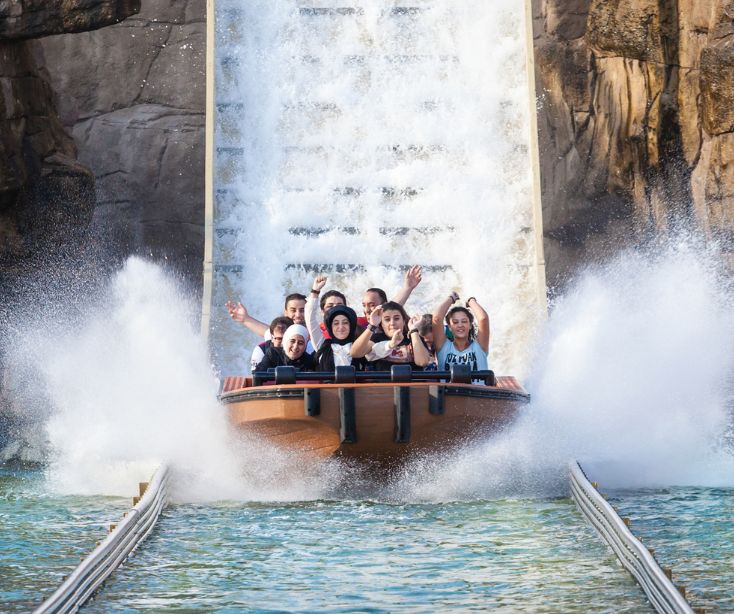
Kimberley Nunn: Theme park safety is actually one of the clearest examples of how specialised our engineering must be. People see roller coasters as pure entertainment, but from an operational perspective, they require uncompromising height safety and emergency protocols.
We work directly with major operators to design static line and fall-arrest systems tailored for maintenance crews who conduct routine structural checks at extreme heights. Beyond regular maintenance, we engineer custom egress systems for unexpected ride stoppages.
If a roller coaster halts elevated off the ground, ride attendants need to evacuate guests safely down steep structural stairways. We provide the specialised harness systems and static line setups that allow guests and staff to clip in securely as they walk down the evacuation stairs. It completely mitigates trip-and-fall hazards in high-stress, elevated environments. It’s an area of our business that people immediately connect with because it translates complex height safety into everyday public protection.
Q: Beyond theme parks, Aegis acts as a safety partner for everything from sole traders to state governments, universities, and major energy producers. How do you tailor safety delivery across such diverse clients?
Kimberley Nunn: The fundamental principle never changes: every individual, regardless of their employer's size, deserves to return home safely at the end of their shift. Whether we are dealing with a self-employed trade contractor carrying basic personal protective gear, or a multinational oil and gas corporation managing hundreds of remote personnel, the stakes are identical.
What changes is the complexity of the delivery. For large institutional clients like Queensland public hospitals, local councils, or universities, safety infrastructure must be integrated directly into the facility's design. In hospital environments, for instance, bulk storage areas for liquid nitrogen and oxygen require fixed atmospheric gas detection networks wired straight into localised and facility-wide alarm systems. Anyone stepping near those rooms must know instantly if an invisible leak has occurred.
At the same time, those exact same workers, or contractors working in municipal car parks handling carbon monoxide risks - must wear portable multi-gas detectors as a secondary redundant defence. Our job is to evaluate the environment from the basement up and layer safety protocols so there is zero single point of failure.
Q: Atmospheric monitoring and gas safety seem to be expanding rapidly within your service portfolios. Where is safety technology heading, particularly regarding connected monitoring and remote workers?
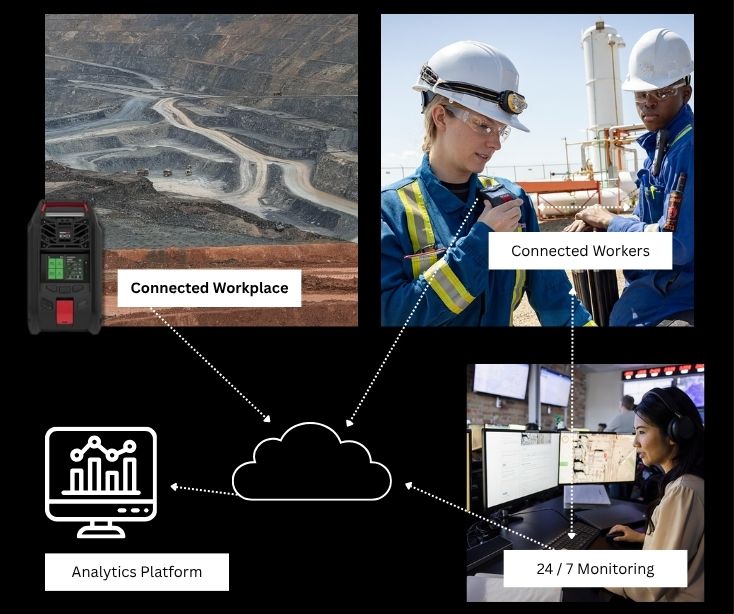
Kimberley Nunn: The intersection of safety hardware, digital connectivity, and real-time data is where the industry is undergoing its most radical transformation. Historically, safety equipment was reactive or localised - an alarm sounded on-site, and you relied entirely on local response. Today, technology enables real-time situational awareness across vast geographical distances.
Consider the resource sector, such as operations out in Chinchilla or remote energy basins. Technicians often work as lone operators across thousands of square kilometres. We now deploy satellite-connected safety monitors that continually track atmospheric conditions while simultaneously broadcasting GPS coordinates and man-down alerts directly to live monitoring centres. If a remote worker experiences a sudden gas release, an unexpected health emergency, or a fall in a zone with zero cellular coverage, the device automatically relays their exact coordinates via satellite within seconds. Emergency response teams can be dispatched immediately without relying on the worker being conscious to make a call.
Furthermore, standard regulatory frameworks are tightening. We are seeing major updates around occupational exposure limits, such as strict monitoring for hazardous dust and welding fumes. Devices like real-time dust photometers and connected air-quality monitors allow companies to maintain continuous exposure logs, protecting long-term worker health while satisfying increasingly stringent statutory compliance requirements.
Q: High-level security and defence infrastructure are becoming major economic priorities in Australia. Aegis holds specialised licenses for advanced monitoring, such as gamma radiation detection. How does this technology function?
Kimberley Nunn: Radiation detection is a prime example of high-end connected safety technology designed for public defence, infrastructure protection, and specialised industrial monitoring. Aegis works with cutting-edge real-time monitoring solutions, such as the Blackline Safety G7/G8 EXO line equipped with specialised gamma sensors.
These area-monitoring units act as portable, drop-in security perimeters that detect illicit radioactive isotopes or hazardous material profiles in real time. Unlike traditional equipment that requires manual data offloading, these connected units stream telemetry continuously.
If a unit deployed at a major event venue, border checkpoint, or industrial site registers abnormal gamma radiation signatures, it immediately triggers localised alarms while simultaneously pushing exact spatial coordinates to central security command networks. This capability allows security agencies and site managers to deploy rapid response protocols with pinpoint accuracy. As public gathering spaces grow (particularly with an eye to the 2032 Olympics), and national defence priorities scale, real-time perimeter threat detection will become standard operational protocol.
Q: As a female executive leading a technical business in traditionally male-dominated sectors - such as manufacturing, height safety, and energy services - what structural shifts are you seeing, and how is Aegis championing inclusion on the ground?
Kimberley Nunn: The industrial landscape is changing, but equipment design has historically lagged behind workforce demographics. For decades, safety equipment - particularly high-rise harnesses and protective gear - was designed around standard male body proportions. That presents not just a comfort issue for women on-site, but a legitimate safety risk. An ill-fitting harness can compromise fall protection mechanics and cause serious injury during an arrest event.
One initiative I am particularly passionate about is introducing specialised, purpose-built safety gear designed specifically for women. We recently partnered with manufacturers offering fall-arrest harnesses tailored specifically to female ergonomics - adjusting chest strap placements, hip contours, and weight distribution.
Equipping women with safety gear engineered specifically for their bodies directly impacts their safety, mobility, and confidence on work sites. Aegis is actively championing the distribution and adoption of these products across Queensland and nationally. Ensuring that women in trades, engineering, and manufacturing have access to correct, high-performance equipment is essential for driving broader workforce participation across industrial sectors.
Q: Looking ahead, what is your strategic vision for Aegis Sales & Service as you scale operations and expand regional footprints?
Kimberley Nunn: Our roadmap centres on smart, sustainable expansion while maintaining the high-touch technical authority our clients rely on. We are actively widening our physical footprint - expanding operational hubs into regional industrial zones like Chinchilla to directly support the expanding resource, agricultural, and energy infrastructure projects in those regions.
Technologically, we will continue investing in connected safety solutions, expanding our telemetry offerings, and helping client organisations leverage digital safety ecosystems to make faster, data-backed decisions.
Safety infrastructure should never be viewed as a passive check-box exercise; it is an active operational enabler. My goal for Aegis is to remain at the forefront of that philosophy, combining 42 years of practical, hard-won expertise with modern, life-saving innovation.
Talk to Aegis about its equipment and services fit and sizing review as part of your next safety review, or visit our newsroom for more from Aegis on workplace safety practice.