

Confined Space Gas Monitoring: A Queensland Safety Guide
A confined space monitor is not a magic wand.
It doesn't make a dangerous atmosphere safe. But at least it tells you that the atmosphere is dangerous, and ideally before someone climbs into it and finds out the hard way.
That distinction matters more than most safety briefings ever bother to explain, and it's also the thread that runs through everything Queensland's WHS Regulation 2011 and AS 2865 require of Person Conducting a Business or Undertaking (PCBUs) operating in confined spaces.
There's also a deadline coming that a lot of Queensland sites are underprepared for. From 1 December 2026, the new Workplace Exposure Limits (WEL) for toxic gases kick in, and for many operations, the alarm setpoints currently programmed into existing monitors will no longer be compliant.
That's not a paperwork problem. That's a worker walking into a space with a monitor that won't alarm until after the exposure limit has been breached.
The Legal Landscape: WHS Regulation 2011 and AS 2865
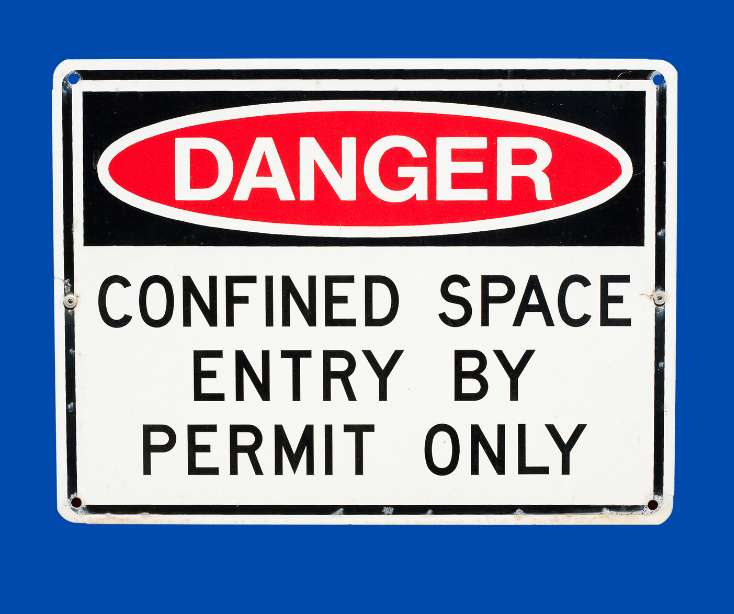
Under sections 62 to 77 of the Work Health and Safety Regulation 2011 (Qld), a confined space is defined as an enclosed or partially enclosed space that isn't designed or intended primarily as a workplace, is at risk of having an atmosphere that contains potentially harmful levels of contaminants, or that otherwise has an oxygen-deficient or oxygen-enriched atmosphere or that could engulf a person.
That broad and yet specific definition catches a lot of things that people don't immediately think of as confined spaces, like excavations, storage tanks, tunnels, sewers, and various pits and chambers that are a routine part of Queensland's construction, resources, and utilities sectors.
The Regulation requires atmospheric testing to be conducted by a Competent Person. In Queensland, that designation has teeth. It typically means someone who’s holding the MSMWHS217 unit of competency (or equivalent), who understands what the monitor is measuring, what the readings mean, and what to do when those readings head in the wrong direction.
AS 2865 (which is the Australian standard for confined spaces) operates alongside the Regulation as the technical benchmark for how confined space work is managed.
Together, they create the framework. The Code of Practice for Confined Spaces 2021 fills in the practical detail.
One more thing worth saying clearly: gas monitoring sits in the hierarchy of controls at the detection level. It’s not an elimination control. If there's a way to eliminate the need to enter the confined space entirely, that conversation should happen before anyone picks up a monitor. Detection controls are what you use when elimination and substitution aren't viable.
Knowing that doesn't change the monitoring requirements; it just means arriving at those requirements honestly (rather than treating a gas detector as a permission slip to enter a space that maybe shouldn't be entered at all).
Mandatory Atmospheric Parameters: The Safe Range
Before any entry, the Competent Person needs to establish that the atmosphere falls within acceptable parameters.
There are three things the monitor must confirm:
First, O2 (or oxygen concentration) needs to sit somewhere between 19.5% and 23.5%. Below 19.5% and the atmosphere is oxygen-deficient, which means cognitive impairment, loss of consciousness, and death on a timeline that is uncomfortably short. Above 23.5% and the atmosphere is oxygen-enriched, which dramatically increases combustion risk. A reading outside either boundary means nobody goes in.
Secondly, LEL(the Lower Explosive Limit) measures flammable gas concentration as a percentage of the level at which the atmosphere could ignite. Entry requires readings below 5% LE. At 10% LEL, everyone evacuates immediately. No exceptions and no "let's just keep an eye on it."
Thirdly, toxic gases are where the 2026 deadline bites hardest. CO (carbon monoxide) and H2S (hydrogen sulphide) are the two most commonly encountered toxic gases in Queensland confined space work, and H2S particularly so in the resources and wastewater sectors where the state's industrial activity is concentrated.
The new WEL thresholds that’s coming into effect 1 December 2026 are lower than the current limits, which means monitors programmed to alarm at the old thresholds are going to be out of compliance from that date.
Pre-Entry vs. Continuous Monitoring
Queensland's Regulation requires atmospheric testing within one hour before entry. That's the legal floor, and it's also actually worth understanding what it does and doesn't tell you.
Pre-entry testing establishes what the atmosphere looks like at the moment of testing. It says nothing about what it will look like twenty minutes into the job. In a static, well-understood environment where the atmospheric conditions are stable and predictable and pre-entry testing plus a competent standby person monitoring remotely may be adequate.
In environments where the atmosphere can change (like sludge disturbance that releases H2S, hot work that generates CO, changing ventilation conditions, or really any scenario where the work itself affects the atmospheric chemistry), continuous monitoring is best practice and arguably the only defensible position.
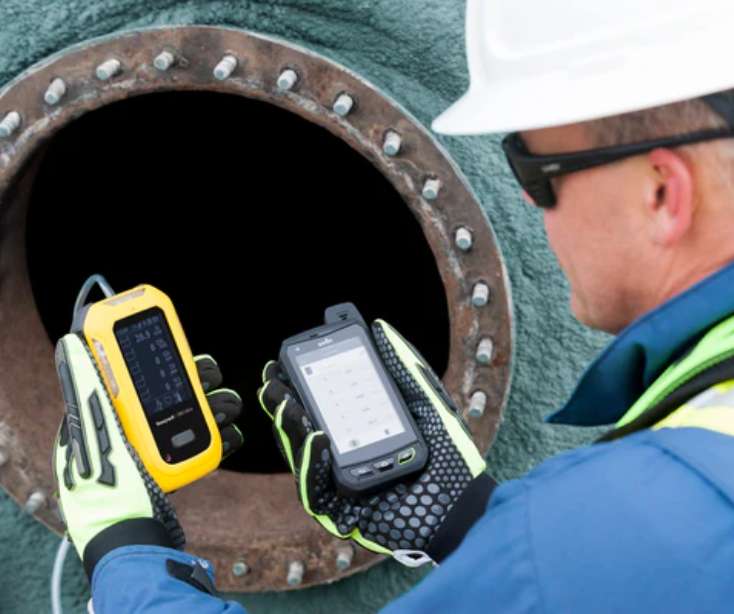
The monitor that’s worn by the person entering the space provides real-time readings and alarms. The standby person monitoring those readings from outside the space is the link between what the instrument sees and the emergency response that needs to happen if those readings change.
Think of it this way, pre-entry testing tells you it was safe to enter. Continuous monitoring tells you it's still safe to stay.
The Standby Person: More Than a Lookout
Queensland's Code of Practice is fairly unambiguous about the standby person's role.
This is not a person who happens to be near the entrance keeping half an eye on things while also doing something else. The standby person has a dedicated function: monitor the entrants, monitor the atmospheric conditions, maintain communication with the person inside, and initiate emergency procedures if something goes wrong.
That last part (initiate emergency procedures) is actually the part that most often gets glossed over in a lot of workplace briefings, and it's the part that matters most.
The standby person does not enter the space to conduct a rescue unless they are a trained rescue responder and appropriate rescue equipment is immediately available. A standby person who enters a confined space to rescue someone without the appropriate training and equipment often becomes a second casualty. The emergency procedure is to call for an emergency response, not to go in after the person.
The standby person also needs to be able to read and interpret the monitor readings, either directly from a device outside the space or via communication with the entrant. A standby person who doesn't understand what a H2SH_2S H2S alarm at 5 ppm means, or why O2O_2 O2 dropping below 19.5% requires immediate evacuation, is not a standby person in any meaningful sense.
Calibration, Bump Testing, and the Digital Audit Trail
Here's a question that sounds administrative but has direct safety implications: when was the confined space monitor last bump tested, and when was it last calibrated? If the answer to either question involves uncertainty, that's a problem.
A bump test (also called a functional test or challenge test) confirms that the monitor's sensors respond to gas. It involves exposing the instrument to a small amount of test gas and confirming that each sensor alarms. It should be conducted daily before use or before each entry, depending on the manufacturer's specifications and site policy. It takes a few minutes and confirms that the instrument is working.
Calibration is a more precise process that verifies the accuracy of the sensor readings against a known concentration of gas. The standard requirement under AS 2865 and most manufacturer specifications is six-monthly calibration, which is conducted by a qualified person with certified calibration gas. A monitor that hasn't been calibrated within the required period has an unknown accuracy and an instrument with an unknown accuracy is an instrument that may not alarm when it should.
The documentation question is where 2026 is pushing Queensland operations in a new direction. Paper-based confined space entry permits and maintenance logs are giving way to electronic Permit to Work (ePTW) systems that create a digital audit trail, such as time-stamped records of monitor calibration, bump tests, pre-entry readings, entrant details, and permit sign-offs.
Getting Queensland Sites Ready for 2032 and Beyond
Brisbane 2032 is reshaping Queensland's infrastructure landscape in ways that are already creating work.
The businesses that are positioned well are the ones that are treating compliance not as a cost of doing business but as an operational standard that differentiates them from competitors who are still doing the minimum.
Remember, the monitor is the measurement tool. The program around it is what makes the measurement mean something. Contact Aegis Sales & Service to learn more about our range of gas detection monitors and to tap into our four decades of experience in keeping Australians workplaces safe.