
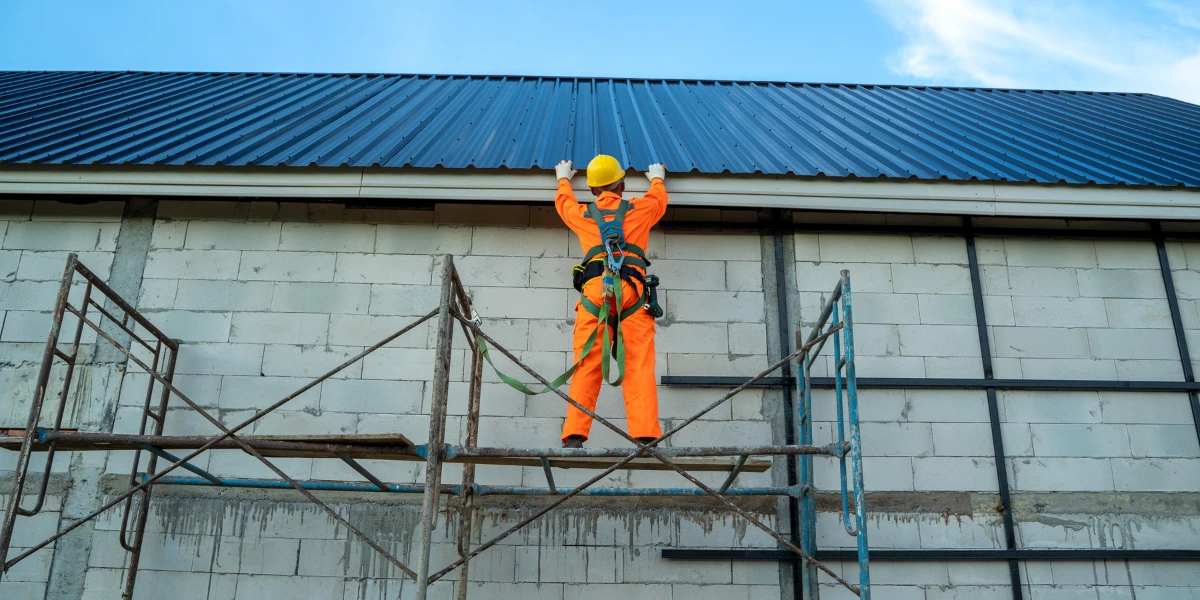
Working at heights is unavoidable in some industries, including construction, telecommunications, maintenance, and warehousing. The risks associated with such tasks are profound and demand an unwavering commitment to safety.
The potential consequences of inadequate safety measures can range from severe injuries (such as fractures, concussions, and spinal damage) to tragic fatalities. So, stringent safety standards for working at heights are not merely recommendations but absolutely crucial legal and ethical imperatives.
Adherence to these standards safeguards not only the physical well-being of workers but also contributes to a more productive and compliant work environment, reducing the financial and reputational costs associated with workplace incidents.
Let's run through your comprehensive guide to navigating working at heights standards within Australia.
Jump to:
What are Working at Heights Standards?
Obligations and Responsibilities
Risk Assessment and Management
What are Working at Heights Standards?
Working at heights refers to any work activity where there is a risk of a person falling from one level to another that could cause injury. This isn't just about scaffolding or rooftops - it encompasses a broad range of scenarios.
For instance, working on ladders, elevated work platforms (EWPs), near unprotected edges, or even on the ground next to an excavation all fall under this definition. The key factor is the potential for a fall and subsequent harm.
In Australia, safety is primarily governed by a robust framework of Australian Standards (AS/NZS). These specifications and procedures ensure products, services, and systems are safe, reliable, and consistently perform as intended.
For working at heights, several critical Australian Standards provide detailed guidance and requirements. Understanding and adhering to these specific Australian Standards is not just about ticking a box - it's fundamental to creating a truly safe working environment when operating at heights.
Key Standards in Australia
Here are the key standards for working at heights to ensure safety.
Construction Work
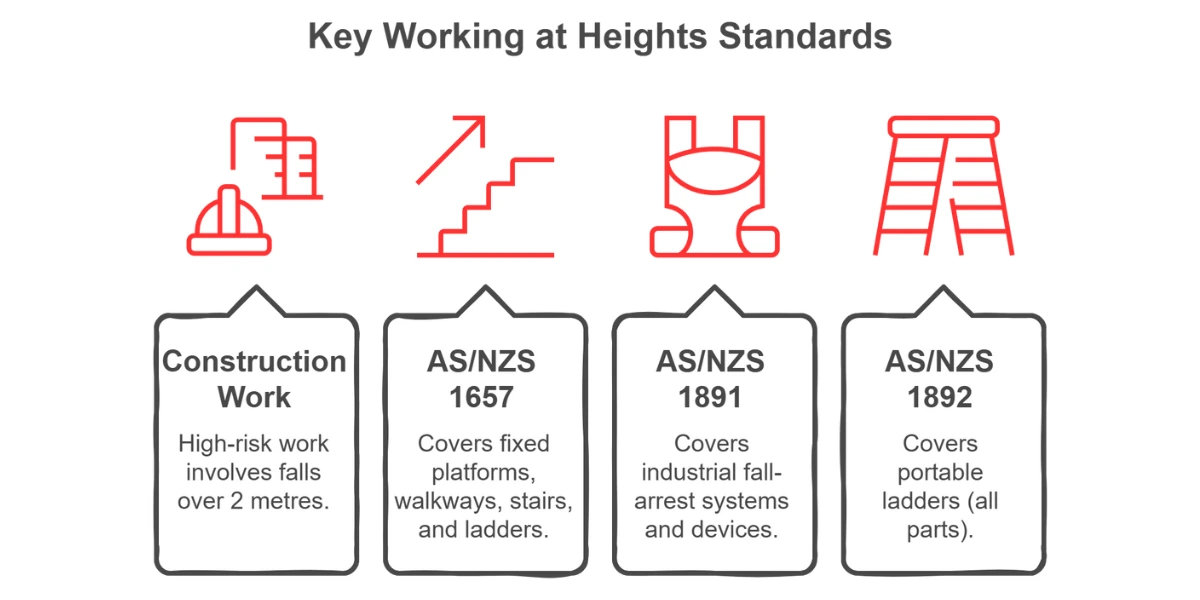
When it comes to construction work, any task that involves the risk of a person falling more than 2 meters is officially classified as high-risk work. This designation is crucial because it triggers the need for specific, rigorous control measures to prevent falls and protect workers. These measures often include detailed risk assessments, the implementation of fall prevention systems, and the use of personal protective equipment.
AS/NZS 1657
This covers fixed platforms, walkways, stairways, and ladders – design, construction and installation.
AS/NZS 1657 is fundamental for any permanent structures used for access and egress at heights. It provides comprehensive guidelines for the safe design, construction, and installation of fixed platforms, elevated walkways, industrial stairways, and ladders.
Adherence to AS/NZS 1657 ensures that these structural elements are built to prevent falls, specifying criteria for dimensions, load capacities, handrails, guarding, and other safety features.
AS/NZS 1891
This covers industrial fall-arrest systems and devices (all parts).
AS/NZS 1891 is a critical multi-part standard series that forms the backbone of personal fall protection.
- Overview of the standard and its components: AS/NZS 1891 covers the entire spectrum of industrial fall-arrest systems. This includes the design, manufacture, selection, use, and maintenance of all components that work together to safely arrest a fall. It addresses everything from the anchor point to the harness.
- Requirements for harnesses, lanyards, and anchor points: The standard provides detailed specifications for fall-arrest harnesses (e.g., full-body harnesses), energy-absorbing lanyards, and static lines. Crucially, it also sets out stringent requirements for anchor points, which are vital for securely attaching fall protection equipment. This includes criteria for their strength, location, and certification.
AS/NZS 1892
This covers portable ladders (all parts).
AS/NZS 1892 addresses the safe design, construction, and use of portable ladders.
- Types of ladders covered under this standard: AS/NZS 1892 applies to various types of portable ladders, including single ladders, extension ladders, step ladders, and trestle ladders, providing specific guidelines for each.
- Inspection and maintenance requirements: The standard outlines essential procedures for the regular inspection and proper maintenance of portable ladders to ensure their ongoing safety and structural integrity. This includes checking for defects, damage, and wear to ensure they are fit for purpose before each use.
Obligations and Responsibilities
Working at heights in Australia is not just about understanding standards - it's about upholding a clear set of obligations and responsibilities that fall on both employers and employees. These duties are legally binding and are designed to create a shared commitment to safety, ensuring everyone plays their part in preventing incidents.
Employer Responsibilities
Employers bear the primary responsibility for the health and safety of their workers. This "duty of care" is comprehensive and requires proactive measures to eliminate or minimise risks associated with working at heights.
Key employer responsibilities include:
- Providing a Safe Work Environment: Employers must conduct thorough risk assessments to identify hazards and implement control measures, ensuring a safe work site with exclusion zones, stable platforms, and edge protection.
- Training and Supervision of Workers: Comprehensive training on hazard identification, risk control, equipment use, and emergency procedures is mandatory. Adequate supervision ensures adherence to safe practices.
- Providing Appropriate Equipment: Employers must supply and maintain all necessary safety equipment, which must be fit for purpose, regularly inspected, and meet Australian Standards (e.g., AS/NZS 1891).
Employee Responsibilities
While employers carry significant responsibilities, employees also play a vital role in maintaining a safe working environment. Their adherence to safety procedures and active participation in safety initiatives are crucial for their own well-being and that of their colleagues.
Employee responsibilities include:
- Following Safety Procedures: Employees must follow WHS policies and procedures. Deviating from procedures risks serious harm.
- Using Provided Equipment Correctly: Workers must use all provided safety equipment (including PPE) as intended and as trained. This includes correctly fitting harnesses, attaching lanyards, and operating machinery per guidelines. Misuse or non-use compromises protection and can lead to serious injury or fatality.
- Reporting Hazards: Employees must report hazards, near misses, or incidents immediately. Proactive reporting helps identify risks before accidents happen. Reporting damaged equipment, faulty harnesses, or unsafe conditions is paramount for workplace safety.
Employers and employees contribute to a strong safety culture by understanding and diligently fulfilling these respective obligations and responsibilities. This significantly reduces the risks associated with working at heights and fosters a secure and productive work environment.
Risk Assessment and Management
Even with the most stringent standards and clear responsibilities, working at heights inherently carries risks. This is why risk assessment and management are not just regulatory checkboxes but crucial, ongoing processes designed to proactively identify, evaluate, and control potential hazards.
Moving from a reactive "fix it after it breaks" approach to a proactive "prevent it from breaking" mindset is vital.
Steps Involved in Risk Assessment
A systematic approach to risk assessment is crucial for any work involving heights. This is a continuous cycle of review and improvement.
The core steps include:
- Identifying Hazards: Thoroughly inspect the work area and tasks for potential fall risks. Be exhaustive and consider all potential fall scenarios.
- Assessing Risks: Evaluate the risk level for each identified hazard by considering its likelihood (how likely is a fall?) and consequence (how severe would the injury be?).
- Implementing Control Measures: Apply physical or procedural changes or specific equipment to eliminate or minimise identified risks. Regularly monitor and review control effectiveness.
- Record Findings: Document all aspects of the risk assessment process, including hazards identified, level of risk, control measures put in place, and any other relevant findings.
- Review Controls: Regularly review and update your risk assessment, especially after changes in the work environment, the nature of the task, or incidents.
Download our Lone Worker Risk Assessment Checklist and read Your Lone Worker Risk Assessment Checklist for more information.
Hierarchy of Control Measures
For implementing control measures, adhere to the "hierarchy of control." This is a step-by-step approach to managing risks, emphasising the most effective control measures first.
Always work down the hierarchy, starting with the most effective options and only resorting to less effective ones if higher-level controls are not reasonably practicable.
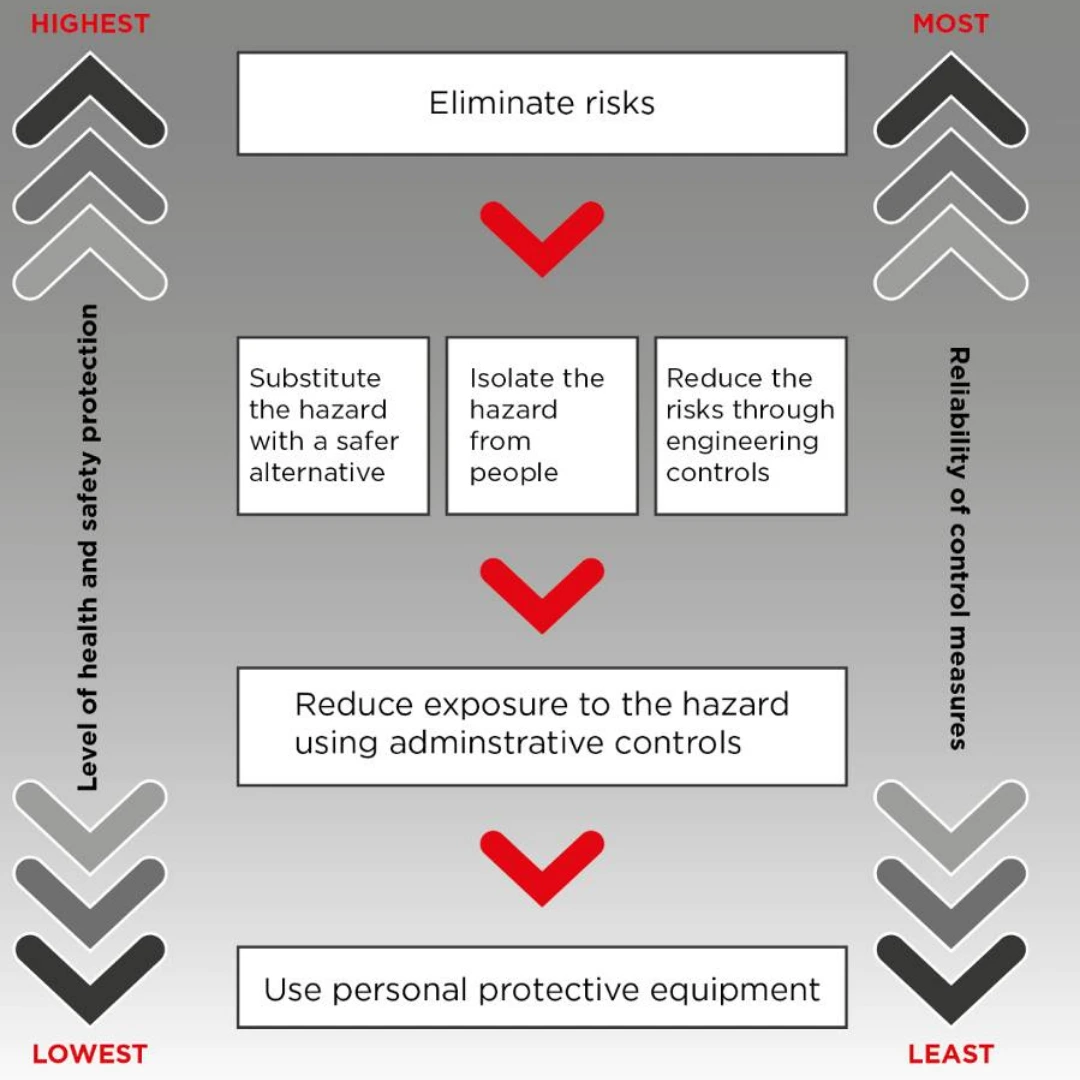
- Elimination: Remove the hazard entirely (e.g., prefabricate on ground). First consideration.
- Substitution: Replace with a safer alternative (e.g., cherry picker over scaffolding).
- Engineering Controls: Physically change environment/equipment (e.g., guardrails, safety nets, anchor points). Highly effective, doesn't rely on worker behaviour.
- Administrative Controls: Establish safe procedures, rules, and training (permits, training, and exposure limits).
- Personal Protective Equipment (PPE): The last resort and lowest control. Protects individual, doesn't eliminate hazards (e.g., harnesses, lanyards, helmets, safety footwear).
Equipment and Safety Measures
Australian standards demand correct, compliant, and well-maintained equipment for safely working at heights.
Fall Protection Equipment
Personal fall protection equipment prevents or safely arrests a fall.
- Harnesses: Full-body harnesses distribute fall forces and reduce injuries. They require regular inspection.
- Lanyards: Energy-absorbing lanyards connect harnesses to anchor points, dissipating fall energy and reducing impact. Total fall distance must be considered.
- Anchor Points: Secure attachment points must withstand immense forces, comply with AS/NZS 1891.4, and be certified by a competent person.
- Fall Arrest Systems: The complete assembly (anchor, lanyard, harness) prevents free falls, accounting for factors like swing falls and clearance. Proper selection, installation, and inspection are crucial.
Other Safety Measures
These collective and engineering controls prioritise fall prevention.
- Guardrails: Physical barriers around elevated edges, compliant with AS/NZS 1657, prevent falls.
- Scaffolding: Stable, elevated work platforms, compliant with AS/NZS 1576 and AS/NZS 4576, eliminate unstable surfaces.
- Safety Nets: Passive systems below work areas catch workers or objects, reducing fall distance and impact. They require correct installation and regular inspection.
Equipment and safety measures must always be based on a thorough risk assessment to ensure proper controls.
Training and Certification
Even the best equipment and the most meticulously planned safety measures are only as effective as the people using them. This is where comprehensive training and appropriate certification for working at heights become absolutely indispensable.
In Australia, it's not merely a recommendation - it's a fundamental requirement that workers performing tasks at height possess the necessary skills and knowledge to do so safely.
Importance of Proper Training
Proper training for working at heights goes far beyond a simple toolbox talk. It's about instilling a deep understanding of the risks, the correct use of equipment and emergency procedures, and fostering a proactive safety mindset.
The importance of this training cannot be overstated for several key reasons:
- Risk Awareness & Hazard Identification: Training helps workers identify subtle fall hazards, assess risks, and understand consequences, enabling informed decisions and precautions.
- Correct Equipment Usage: Training covers proper inspection, donning, adjustment, and connection of harnesses, choosing lanyards, and verifying anchor points. Incorrect use negates equipment effectiveness.
- Understanding Control Measures: Workers learn about the hierarchy of controls (e.g., guardrails, scaffolding) and their role in maintaining them and reporting deficiencies.
- Emergency Procedures: Training includes rescue plans, self-rescue, and assisting fallen colleagues to mitigate post-fall complications like suspension trauma.
- Legal Compliance: Proper training ensures employers meet WHS obligations for high-risk tasks like working at heights, avoiding penalties.
Certification Requirements for Working at Heights
In Australia, the "Statement of Attainment" is the certification typically issued upon successful completion of a nationally recognised unit of competency (such as RIIWHS204E) for working safely at heights. This statement formally acknowledges that an individual has demonstrated the required skills and knowledge for that specific task.
- Competency-Based Training: The Australian training system is competency-based, meaning certification is granted when an individual demonstrates they can perform the tasks to the required standard, not just that they attended a course.
- Validity and Refresher: While a Statement of Attainment doesn't typically "expire" in the same way a license does, industry best practice and many employer policies require refresher training every 2-3 years. This ensures workers remain competent and up-to-date with current WHS legislation, industry standards, and equipment advancements. Some high-risk work licenses (like EWP licenses) do have specific expiry and renewal requirements.
- Proof of Competency: Workers must be able to provide evidence of their current competency to employers or regulators. This reinforces the importance of retaining certification documents.
Investing in proper training and ensuring workers hold the necessary certifications are critical steps in building a culture of safety. It empowers workers to perform their duties confidently and safely, significantly reducing the likelihood of incidents and ensuring compliance with Australia's rigorous safety standards for working at heights.
Compliance and Inspections
Implementing comprehensive working at heights standards isn't a one-time event - it's an ongoing commitment that requires vigilant compliance and regular oversight.
In Australia, maintaining safety at height relies heavily on a robust system of inspections and audits, ensuring that safety measures remain effective and that all legal obligations are consistently met. This continuous vigilance is the bedrock of preventing incidents and fostering a truly safe workplace.
Regular Equipment Inspections
The equipment used for working at heights, from harnesses to ladders, is life-saving gear. Its integrity directly correlates with worker safety. Therefore, a rigorous inspection regimen is non-negotiable. This involves two critical levels of checks:
- Pre-use Checks: Before working at height or using fall protection, workers must conduct quick visual and tactile pre-use checks. This involves inspecting equipment like harnesses (webbing, D-rings, buckles), lanyards (webbing, stitching, connectors), and ladders (rungs, feet, side rails) for damage or wear, ensuring immediate safety.
- Periodic Inspections: Beyond daily checks, fall protection equipment and height safety systems require regular, documented periodic inspections by a competent person, typically every three to twelve months. These detailed inspections, often using specialised tools, ensure ongoing compliance with Australian Standards (e.g., AS/NZS 1891) and verify equipment remains fit for purpose. Records of these inspections, findings, and any repairs must be meticulously maintained.
Workplace Audits
While equipment inspections focus on specific tools, workplace audits provide a much broader, systemic review of an organisation's entire working at heights safety management system. These comprehensive evaluations assess whether:
- Policies and Procedures are Adequate: Are the safety policies and safe work method statements (SWMS) clear, current, and comprehensive? Do they address all relevant hazards and control measures?
- Training is Effective: Are all workers adequately trained and certified for working at heights, and is refresher training up-to-date?
- Controls are Implemented and Maintained: Are engineering controls (like guardrails and scaffolding) properly installed and maintained? Are administrative controls (like permit systems) being followed?
- Records are Kept: Are all necessary records, including risk assessments, equipment inspections, maintenance logs, and training records, being accurately kept and easily accessible?
- Compliance with Legislation: Does the workplace comply with the Work Health and Safety (WHS) Act, WHS Regulations, and relevant Australian Standards?
Audits can be conducted internally by trained personnel or externally by independent safety consultants. They are invaluable for identifying gaps in the safety system, ensuring continuous improvement, and demonstrating due diligence to regulatory bodies.
Consequences of Non-Compliance
Failing to comply with Australian working at heights standards has severe consequences:
- Serious Injuries or Fatalities: Increased risk of falls leading to life-altering injuries or death.
- Legal Prosecutions and Penalties: Regulators can issue improvement/prohibition notices, impose substantial fines (hundreds of thousands to millions), and even imprisonment for gross negligence.
- Reputational Damage: Accidents and legal action harm a company's reputation, affecting contracts and talent attraction.
- Increased Insurance Premiums: Poor safety records lead to higher insurance costs.
- Worker's Compensation Claims: Injuries increase employer costs and administrative burdens.
Ultimately, compliance and inspections are crucial for a successful working at heights safety strategy, protecting lives and ensuring a safe, compliant environment.
Conclusion
Working at heights in Australia is a high-risk activity. It demands strict adherence to legally enforceable safety standards and regulations designed to prevent falls.
Key Australian Standards define benchmarks for equipment from platforms to ladders. Both employers and employees have distinct yet interconnected safety responsibilities.
Risk assessment and management, utilising the hierarchy of controls (elimination to PPE), is crucial. Equipment integrity is vital, as is comprehensive training and national certification for workers. Ongoing compliance through inspections and audits is a legal and moral imperative, with severe consequences for non-compliance.
Safety and compliance are non-negotiable investments in lives, business, and reputation. Prioritising safety fosters a secure workplace culture.
Need help with safety inspections, choosing compliant equipment, or testing and calibrating it?